
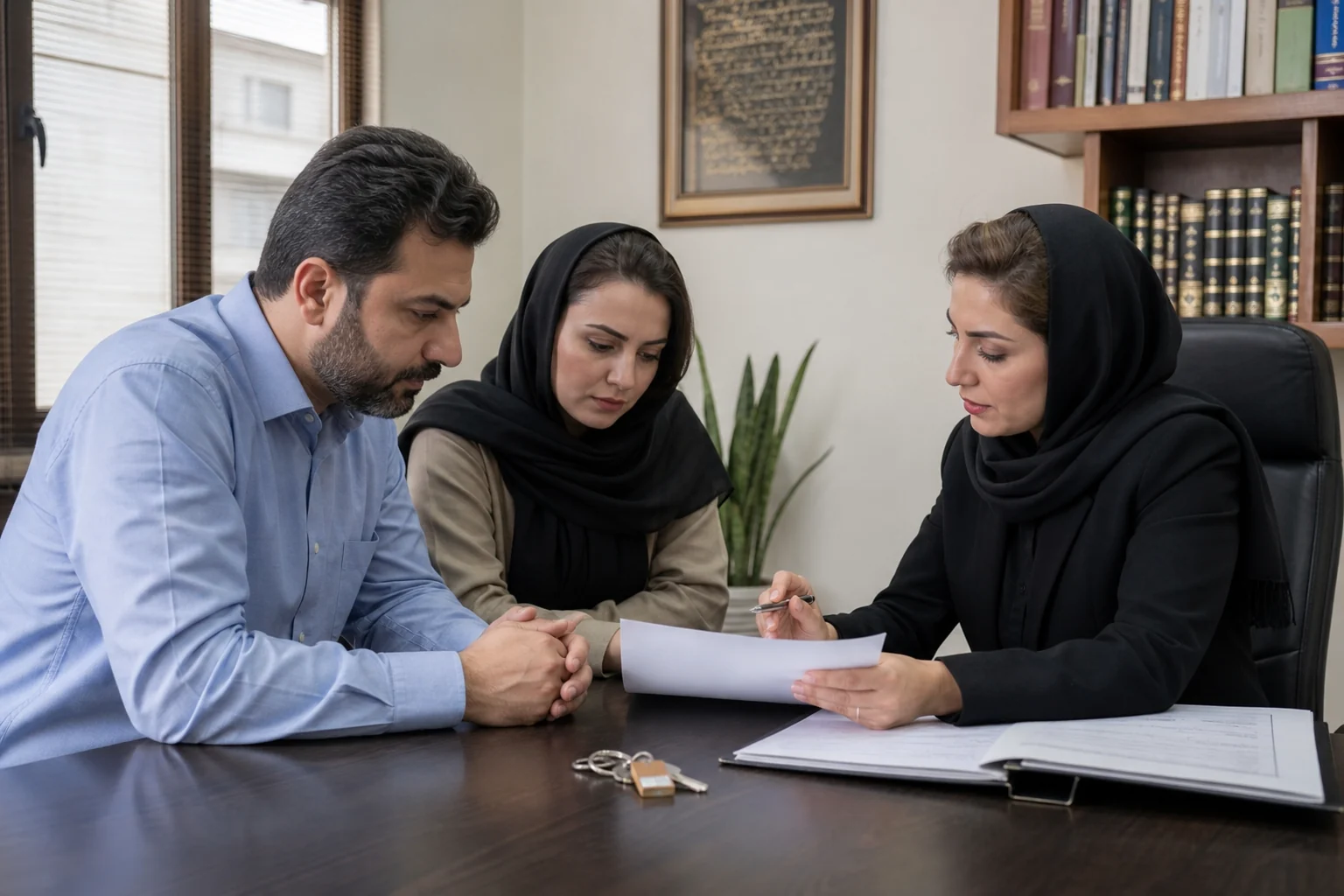
Iranian real-estate contracts
A property agreement involves more than price and handover. Title status, precise property details, payment and transfer timetable, security, agreed sums for breach and responsibility for removing registration obstacles must be clear for the contract to be enforceable.
Many property disputes arise from off-the-shelf agreements and ambiguous clauses. Draft the contract for the particular property, registration status, parties and transaction purpose; avoid copying general templates without review.
Request a consultationWhat are real-estate contracts?
Under Articles 10, 190, 219 and 220 of the Iranian Civil Code, private contracts meeting the essential validity requirements are effective and binding. The parties are bound by customary and statutory consequences as well as express terms. Property contracts must also comply with registration rules and special legislation.
Key contractual clauses
Specify the property and parties, price and payment method, handover and deed-execution dates, mortgage and attachment status, debts, agreed sums for breach, termination rights, dispute-resolution forum and arrangements for documents.

Usual stages of review and follow-up
Reviewing the property’s status
The title document, permitted use, mortgage, judicial attachment, and permits are reviewed.
Defining the parties’ obligations
Payment, handover, mortgage discharge and formal transfer are scheduled.
Designing enforcement provisions
Agreed sums for breach, termination rights and practical security are provided for.
Signing and retaining documents
Copies, attachments and payment receipts are kept in an organised record.
Template or custom contract
The sample contract can only be a preliminary checklist. The actual contract must be adapted to the situation of the case; Because the difference in joint ownership, power of attorney, mortgage, pre-sale or participation in construction creates completely different legal effects.
Related topics
Iranian property disputes
Return to the comprehensive property-law services page
action to compel execution of an official title deed
Official transfer of property and removal of registration obstacles
action to recover possession based on established ownership (khalʿ-e yad)
Ending unauthorized possession on the basis of established ownership
Act on Mandatory Official Registration of Immovable Property Transactions
Official registration of the transaction and the legal effects of private instruments.
Relevant legal sources
Iranian Civil Code («قانون مدنی»)
Act on Mandatory Official Registration of Immovable Property Transactions
Iranian Registration of Deeds and Properties Act («قانون ثبت اسناد و املاک»)
This list identifies the principal legal provisions relevant to the page. The applicable law and amendments must be checked against the dates, subject matter and circumstances of each case.
The official texts and latest amendments are available in the National Database of Iranian Laws and Regulations.
Frequently asked questions
Methods of contact
For legal advice or follow-up on a case, contact us using one of the methods below.