
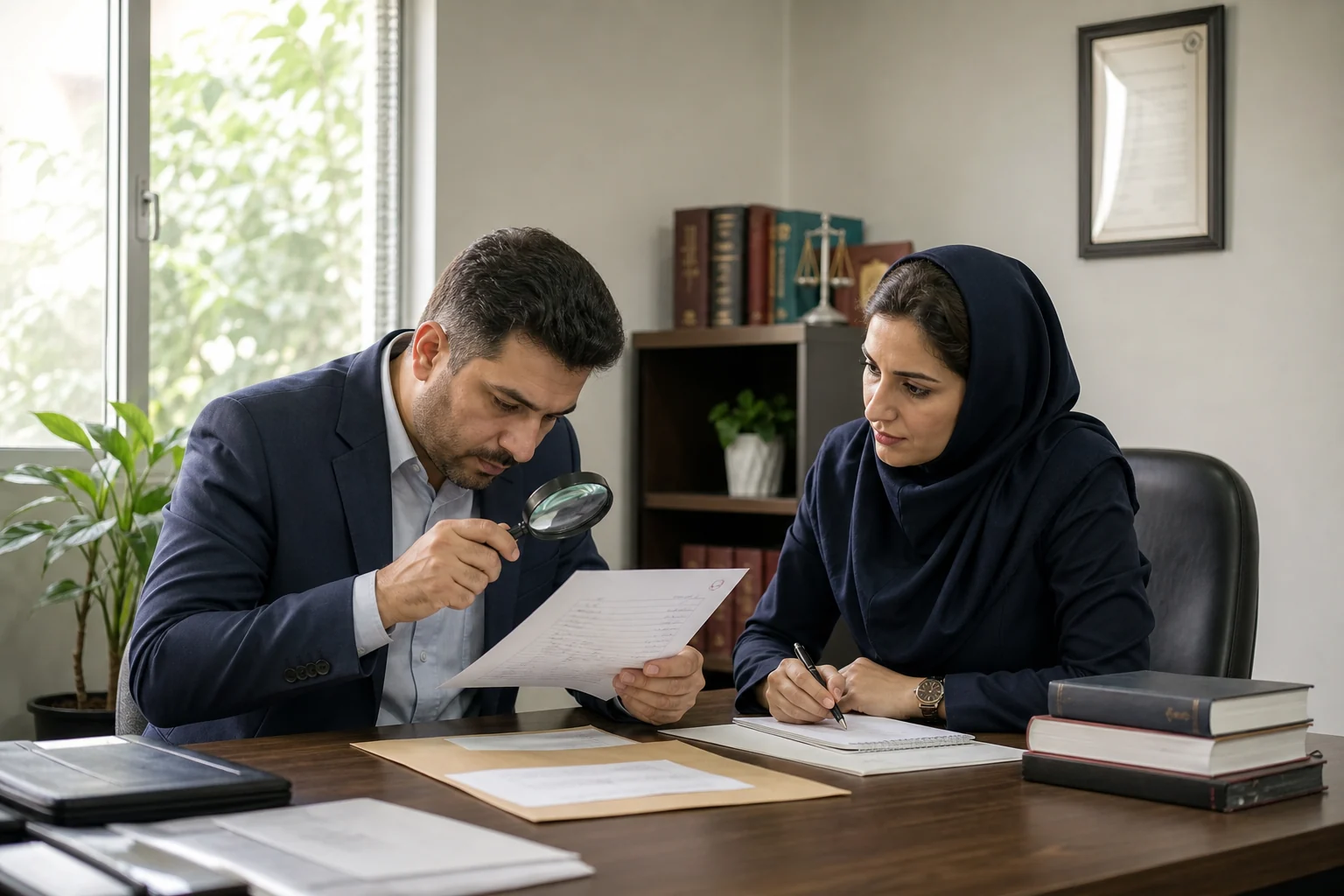
Forgery and use of forged documents
A forgery case must identify which writing, document, signature, seal or data was created or altered, how it was done and to whom the conduct can legally be attributed. Use of a forged document is a separate offence with its own requirements.
Request a consultationForgery and use of forged documents
A forgery case must identify which writing, document, signature, seal or data was created or altered, how it was done and to whom the conduct can legally be attributed. Use of a forged document is a separate offence with its own requirements.
Important aspects of this matter
Point 1
The original document or best available copy, and a record of who had access to it
Point 2
Specimen signatures, handwriting, seals or comparison documents, where relevant
Point 3
When and where the allegedly forged document was presented or used
Point 4
Expert examination of handwriting, signatures or technical matters where the judicial authority considers it necessary

Legal points and course of action
A challenge may concern the signature, text, date, amount, seal or a later addition to a document. Alleging forgery without identifying the disputed part makes the defence and expert examination more difficult.
If the disputed document was used in civil, registration, banking or administrative proceedings, document how it was presented and its effects. Forgery and use of a forged document may involve distinct conduct and evidence.
Related topics
Theft
Theft complaints, proof of the taking of property, CCTV and witnesses, stolen property, types of ta’zir theft offences and key points for proceedings before the prosecutor’s office and court.
Threats
Complaints about threats made in person, by telephone or through messaging services; preserving messages and recordings; evidence; the distinction from insult; and criminal defence considerations.
dishonoured cheque
Conditions for criminal proceedings over dishonoured cheques, certificates of non-payment, statutory deadlines, cheques outside the criminal route and the distinction from claims for payment.
Filing a criminal complaint and preparing the complaint document
The events, possible offence, evidence, prosecutor’s-office investigation, final orders and follow-up stages.
Relevant legal sources
Book Five of the Iranian Islamic Penal Code (Ta’zir and Deterrent Punishments), enacted in 1375 SH, as amended
Iranian Code of Criminal Procedure, as subsequently amended.
Iranian Islamic Penal Code, enacted in 1392 SH, as amended
This list identifies the principal legal provisions relevant to the page. The applicable law and amendments must be checked against the dates, subject matter and circumstances of each case.
The official texts and latest amendments are available in the National Database of Iranian Laws and Regulations.
Frequently asked questions
Methods of contact
For legal advice or follow-up on a case, contact us using one of the methods below.